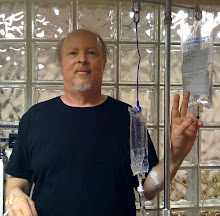
Sunday, May 06, 2012

Hurry up and wait

Those of us with chronic lymphocytic leukemia are familiar with the concept of "watch and wait," which means being a patient patient while your disease take its course. This can involve a certain degree of dis-ease (pun intended) as you and your doctor lurk about, waiting for just the right moment to begin treatment, should that become necessary. 

Of late I feel like I've been experiencing something called "hurry up and wait," which is what you do when your disease definitely needs treatment but you are waiting for the best treatment option to make itself available, which is supposed to happen Any Day Now.

"Watch and wait" drives Type A personalities a little bit crazy, which isn't really a problem for me. "Hurry up and wait," on the other hand, can be a bit of a challenge.

In my case, since the end of the Revlimid era last November, the CLL has taken a turn for the worse, compounded by departing doctors, insurance runarounds, and potential clinical trials that have proven to be trials in more ways than one. I've written about some of this, and am here to provide a little update now.

The good news is that Any Day Now there should be an opening in a kinase inhibitor trial with my name on it. I've been waiting on two such choices for a while. 

The first, which I'll call Trial One, almost came to fruition six weeks ago. In fact, I was all dressed up for extensive testing for a trial slot, only to arrive and find I had no place to go. Seems an "adverse event" in the trial of said inhibitor had just raised a big red flag at corporate headquarters and further patient accrual was being put off. All this happened in real time as I sat in my hotel, or in the Vietnamese restaurant adjacent to my hotel. Eventually I was sent home with the knowledge that while Trial One was probably out for the forseeable future, there was a Trial Two that would have an opening in another month, give or take.

And, so, here I wait at home, far from pho, disappointed but cautiously optimistic that I might make it into the second trial, in which no adverse events have been reported to date, at least that I know of.

You could argue that I am lucky the adverse event in Trial One didn't happen to me. It was an unexpected case of severe tumor lysis, apparently, which means massive, immediate die-off of leukemia cells that, uncontrolled, can damage the kidneys. Trials are called trials for a reason, and as much as we like to think of ourselves as intelligent, forward-thinking patients, we are also in fact risk-taking lab rats when we sign on the dotted line. So maybe I dodged a bullet by not making it into Trial One, which would not have been so disappointing had the principal investigator not been so genuinely enthusiastic about its potential to help me.

Now, I could go into names of drugs and names of doctors here, but what I have heard is second-hand, and I'm not in the business of reporting such things as absolute fact. This is a blog, not journalism, and there is a huge difference between the two that I still hold somewhat sacred, having worked in the news business back when double-checking the facts counted for something.

To keep my CLL at bay while waiting for trials, I have been taking huge pulsed doses of steroids every few weeks. My new local hem/onc calls it the "myeloma dose" -- 40 mg of dexamethasone daily for four days. The advantage is that it does reduce the nodes temporarily, and it has bettered my platelets a bit (they're now at 101) while perhaps also keeping my hemoglobin steady in the low 9s, which isn't so awful once you get used to it. Plus the steroids leave your system in under six days, and the prophylactic meds (antibiotics, antivirals, antifungals) also leave quickly, meaning that you can be ready to qualify for a clinical trial without a long delay.

Since 2007, I've had a fair amount of experience with steroids, about which I plan to write at some point soon. I think they're a good but problematic stop-gap, and nothing more. Steroids are a potentially useful component in any "hurry up and wait" strategy, but they're no way to live.

The late Dr. Terry Hamblin once pointed out that in end-stage cases he would prescribe steroids once a month just to keep the patient going, and I can see how, when all else fails, it beats the alternative. 

Fortunately, we now have more alternatives, such as the kinase inhibitors, as well as Revlimid for those who can tolerate it, not to mention the supercharged T cells being studied at such places as the University of Pennsylvania.

Which brings us to the real game to win here. I call it "slow down and wait." By that I mean, allow science to outpace your CLL by just enough that it can save your life. I feel like I'm cutting it close on this one, but there really is no other choice, except to go marching off to the Relapsed-and-Refractory Factory and await the end.

Call me irresponsible, accuse me of "dithering" in the face of my own unplanned obsolescence, but I am not comfortable with following a conventional wisdom that can change from one day, or week, or month, to the next. In CLL, action can mean progress, but it can also mean the illusion of progress. Doing something just to do something may not always be the most rational course. So I often find myself taking my chances with inaction.

"Slow down and wait" involves a certain amount of powerlessness, of accepting things you probably cannot change, among them the possibility that Fate might throw something at you, for good or ill. By making wise (or just plain lucky) treatment choices you might be able to control the disease long enough to buy more time, but there are no guarantees, since the disease can always take a turn for the worse at a whim. As to the pace of scientific progress -- and the availability of its fruits in your locale -- that is all luck, pure and simple. 

So far, I've been fortunate that science has done more since my diagnosis in 2003 than I, or perhaps anyone else, might have expected. My disease behaved decently until last fall, and now has settled into a new plateau, worse than it was but not getting worse, at least yet.

And Any Day Now, well, I hope to be trying a new treatment that might just control this thing. So I'm hurrying up and waiting in order to slow down and wait some more. Welcome to CLL.

Monday, February 20, 2012

Revlimid, in retrospect

Now that my year-and-a-half experiment with Revlimid -- aka lenalidomide -- is likely done for good, I think it's appropriate to sum up what I've learned.

Blogs tend to blurt out information that gets disconnected after awhile; my training as a feature writer tells me to sum up and provide context. For those chronic lymphocytic leukemia patients considering Revlimid, I hope my anecdotal experience might be of some use, which is why I am writing this.

I say "anecdotal" with all the usual warnings, as in YMMV -- Your Mileage May Vary -- and with this drug, it probably will. 

Pills are small and easy to take, but this one is not, on so many levels. For a little capsule that's supposed to be an "immunomodulator," it can easily provide more grinding fits and challenges than regular chemo. In CLL, lenalidomide comes with a wide degree of patient tolerance issues. One of them ultimately derailed the drug for me, but until it did, this stuff was almost golden.

Today, it is being eclipsed by the buzz about kinase inhibitors with license-plate names: CAL-101, ABT-199, AVL-292, PCI-32765, and so on. These drugs are in trials with promising results; while they may end up being a first choice over lenalidomide for many patients, in some cases they may not. Revlimid is here to stay for CLL, and it is a useful option to have. I used it from March 2010 until November 2011, with three months off starting in March 2011.

Revlimid modulates the immune system. Somehow. And in people with weakened immunity, such as CLL, this can do a couple of great things. One, it can cut down on infections, sinus and otherwise. In fact, it has been suggested that low doses of lenalidomide can be given to older people -- not necessarily CLLers, just older people who tend to get sicker easier -- as a means of keeping the immune system more functional. I have been fortunate in my CLL career not to have been especially infection-prone, despite my immunoglobulins being in the tank for nine years. While on Revlimid I was infection free -- not even a sinus minus clogging up my yap.

Revlimid normalized my blood counts, and it has done this for a lot of people. My absolute lymphocyte count wasn't too high to start with, as most of my disease is located in my 11q-deleted lymph nodes. But at one point my CBC became picture-perfect, frame-able even. You couldn't tell by the numbers that anything was wrong.

And this is a really big deal -- while using Revlimid, my very nasty, recurring case of autoimmune hemolytic anemia resolved. From the moment that the AIHA was diagnosed in March 2007, until Revlimid put a stop to it, I was bedeviled by serious hemolysis and treatments that began to fail, one after another, until I was left getting pretty heavy chemo (Rituxan, dexamethasone, and cyclophosphamide) as frequently as every three months. And there was some question about how long that could continue before a splenectomy became a necessity.

Dr. Asher Chanan-Khan, probably the country's leading lenalidomide-CLL researcher, told me in an e-mail before I started the drug that he had seen two actively hemolyzing patients -- hemolysis means your macrophages are eating your own red blood cells, which they will continue to do until you have none left and die --  whose hemolysis resolved while on Revlimid.
My own experience has led me to prosthelytize on these pages more than once, and so let me shout it out again for all my AIHA fellow-sufferers to hear: Please, please, consider Revlimid, especially if you are finding that the usual treatments (steroids, rituximab) are failing. If it does for you what it did for me, you'll have enough red blood cells to do some serious dancing in the streets. After a year of Revlimid, my hemoglobin was back up to 15.1 -- the exact number it was at on the day of my CLL diagnosis in 2003. I turned Coombs negative and remain so at this moment.

Revlimid also reduced my lymph nodes to a noticeable degree. I would say -- and I am guessing, since some nodes are more palpable than others -- by up to about half. In a nodey guy like me, that is great news. It took a long time. But it was slow and steady. And in CLL, slow and steady is often all you need to win the race, or at least to stay where you need to be when in competition with the growth of the disease.

Now, here's a real Revlimd success story. I have a friend with 11q-deleted CLL who went into a Revlimid clinical trial as frontline treatment. His lymphocyte count had reached a half-million (that's not a typo). In the trial, patients are upped from 5 mg daily to 25 mg daily over time, if they can tolerate it. And my lucky friend proved able to tolerate it, and to get the benefit from the maximum dosage. 

By the end of his two-year stint, his counts had normalized, what nodes were left were barely palpable, his hemoglobin was high, and a bone marrow biopsy showed improvement. Platelets were a bit low, but you can't have everything, and he's been told they should recover. He had found himself an excellent way to start out controlling his CLL without burning any bridges. He has had treatment, but not chemotherapy, which sets up disease resistance. From all indications, he can go on to do any other treatment out there, or take advantage of a new treatment that comes along, and he can expect it to work as well on him as if he had never been treated. (And, of course, he can always do more Revlimid at relapse.)

That is great news in the Second Chance department, which is so important in CLL,  and which cannot be understated. Preserving a second chance is what I was trying to do with single-agent Rituxan back in the days before Revlimid. That turned out not to work. Once you've done single-agent Rituxan, you have diminished your response to future treatments. It's not a free ride. But since Revlimid is an immunomodulator and works on totally different principles from chemotherapy, it does not appear to set up disease resistance. (Not that it won't make changes in the immune system, and only time will tell if there's something important about it that researchers and patients have been missing so far.)  But if I were starting out and needing treatment, I would seriously consider Revlimid for the Second Chance reason, as well as for its potential to do the job in the blood, nodes, and marrow that needs to be done.

And if I had been through the chemo mill, and was pretty much out of Second, Third, and Fourth chances, I would also look into Revlimid. There are some CLLers out there who have been kept alive for years now with daily doses of Revlimid. Fate has allowed them to tolerate it, and it works as well on the nasty 17p-deleted CLL clones that are left after the Chemo Wars as on the "nice" ones you tend to find more of at the start. For these people, Revlimid truly is golden.  

Dosages are tricky. Not everyone can tolerate 25 mg. Celgene, the drug's maker, has recommended that as a routine matter, CLLers not be given more than 10 mg daily. Some patients are coasting along at 5 mg, in maintenance. Some can tolerate 10, some higher. Some can't tolerate it at all.

In my case, doses as low as 5 mg have caused problems. I'll get into that in a minute. Suffice it to say that the higher the dose you can take, the more the drug will probably be able to do for you. Finding that right dose, and watching out for symptoms that could indicate drug intolerance, requires a great deal of patience. It helps to have a doctor who has used the drug in CLLers, or at least in those for whom it was originally intended, patients with MDS. You need to be aware of your body and on top of symptoms if you are going to experiment with it, and let's face it -- in CLL, Revlimid is still experimental.

Revlimid can also make you feel kind of out of it. Before I get into more serious tolerance issues, one thing my friend and I both noticed, and that some others have noticed, too, is that lenalidomide can bring a certain dullness to your life. I wouldn't say fatigue, necessarily. But this drug is the enemy of multi-tasking. It can lead to a lack of focus or sharpness. You can operate heavy machinery, you can go to work, you can do all the things you normally do, but somehow you do these things slower, or somewhat more detached, or in a somewhat foggy world involving less concentration. This is not a good-time, party drug. When Marilyn and I flew back East for my step-mom's big 70th birthday bash, I stopped taking Revlimid a few days before. I knew that if I were off of it, I'd be enjoying the party and making conversation. If I were on it, I'd be sitting in a corner trying to remember who so-and-so was from a distance. Suffice it to say that lenalidomide is no help with libido, either. While not everyone reports these sorts of symptoms, It's ongoing use could lead to a somewhat lower quality of life in some respects. That's not enough to make it not a choice, but it's potentially part of the experience (and for some it does get better over time.)

Revlimid can lead to serious clotting issues. This is one of those things that Celgene is very up-front about, and that the nurses who dispense the drug are always reminding you of.

By now, if you've read CLL Diary, you know that clotting was my problem, and that this shifted the risk-reward scale in favor of abandoning lenalidomide. To recap, I have a family history of clotting troubles. My mother died of a pulmonary embolism at 57,  just two years older than I am now. Her older son -- my older half-brother -- suffered several strokes, one of which took his life this past July at the age of 66. I saw him become bedridden and incontinent, barely able to move one hand, hardly able to swallow, eventually surviving through a stomach plug. I saw him decline, both physically and mentally. One night, a few weeks before he died, in a moment of frightening clarity, he shouted something from the hospital bed that had been set up in his living room: "What a miserable existence!"

It is possible to live with CLL and have good quality of life. In the QOL department, there are many worse conditions to have, not all of them cancerous. Staring my brother's fate in the face, I was ever reminded that worse things could await me if I were not careful.

I had two transient ischemic attacks, aka mini-strokes, while on lenalidomide, and then a third incident that probably qualified as something of the same. The first incident came about four months in, while I was on 10 mg daily, and involved about ten minutes of aphasia, or language difficulty. It resolved completely, and I ignorantly chalked it up to "chemo brain" and put it out of my mind. 

The second attack came some some months later, after things had been going so well that my oncologist gave me the go-ahead to up the dose to 15 mg daily. We wanted to go in and get at those nodes. After a week or so, the same language difficulty appeared again, also for about ten minutes. This time I went to see the doc, and she put two and two together, and clotting issues took center stage.

Which is why, like my lucky friend, who underwent a supervised trial in which Coumadin was required prophylaxis, I would not advise anyone to go on Revlimid without also going on Coumadin, or warfarin. Even if you don't think you have a clotting problem, it is wise to guard against it. If it is good enough for Dr. Chanan-Khan's patients, it should be good enough for your doctor's, too. Like any prophylactic drug we CLLers take -- such as allopurinol, acyclovir, or Bactrim -- it is designed to guard against a problem occurring. And at a low dose, such as 2 mg daily, it should not present a problem for most people. It is insane not to do it, IMHO.

The third incident occurred in September of last year, and came and went over the course of a week. By that time, I was on higher doses of warfarin, which were not improving my clotting time much at all, and lower doses of Revlimid, such as 5 mg three times a week. I felt a transient numbness on the left side of my mouth, sort of the way you feel after you've been to the dentist and the Novocaine has started to wear off. Simultaneously, I also felt this numbness in my left hand. This resolved after about 15 minutes, but it came and went for short periods during the following week.

Finally, of course, there is the story of my lenalidomide gotterdammerung and the abscessed lymph node, catalogued a few posts back complete with messy photos. Despite a year-and-a-half of being on the drug (and sometimes off of it), resuming it at 5 mg just four days in a row caused such unholy tumor flare as to land me in the hospital.

Which leads me to a final point: Revlimid can do unanticipated things to the immune system. In my case, it appeared to goose it up over time. There was a three-month period, starting in March 2011, when I was off the drug. I was, in part, expecting to get a slot in a kinase inhibitor trial, which did not pan out, and I needed to be "drug free" for 28 days before starting the trial.

Just before resuming Revlimid after this hiatus, I came down with a case of hives. This was unusual, since my allergies don't usually take that form. It resolved with Benadryl (speaking of Zombie drugs) and I went on to restart Revlimid at a general course of 5 mg three days a week. Over the course of the last summer, I was constantly getting hives, several times a week. Move me to a spot with a new allergen, and it would start. Let me get a little sweaty in Arizona in the summer -- which is impossible not to do -- and the the hives would come again. It was all easily controlled; in fact I began taking Allegra every other day just to keep it away. But something in my immune reaction was more hair-trigger, way more prone to act quickly than it had been in the past.

My theory -- and, again, this is anecdotal guesswork -- is that Revlimid, which had rewritten my immune system in some good ways, also rewrote it in some more dangerous ones. A recent paper by Dr. Chanan-Khan and others discusses mechanism of action at some length, and basically points out that lenalidomide works best when there are lots of NK and T-cells present. (The latter, little marvels, also surveil against squamous cell skin cancer, another problem I've had, and something common to CLLers; Revlimid appears to have kept a lid on those, too.)

The paper, Tumor flare reaction associated with lenalidomide treatment in patients with chronic lymphocytic leukemia predicts clinical response, is worth reading if you're thinking of taking the lenalidomide leap. It appeared in the May 15, 2011 issue of Cancer, which is published by the American Cancer Society. Now, here is where I teach you to fish. Most journals that usually charge for articles will provide one free for the personal use of a patient if you just write and ask. In this case, contact canceredoff at cancer.org. 

Tumor flare, the paper explains, predicts response in Revlimid. There is a two-thirds chance that you will encounter it. From the very beginning, tumor flare was always a challenge for me. It came on big when I first started the drug, then remained at a lower but tolerable level during treatment as the ongoing battle with the nodes was engaged. What happened at the end with the abscess was one for the record books. Again, just a guess, but I wonder if the Revlimid had created in me a condition by which my immune system overreacted when the Revlimid itself was re-introduced at a 5 mg sustained dose, higher than I had been taking for some time.

Talk about ironic. In many ways, I responded very well to Revlimid, perhaps a little too well. It created too much fire to play with.

But it got me through a rough patch when I needed it, and it saved my ass in 2010 and much of 2011, getting me in a bumpy fashion to the great hope of 2012, kinase inhibitors.

So, thank you Celgene. And if you, fellow patient, are in the right position to tolerate it, Revlimid could be an important option for treatment. Just consider that it may not be easy, and do expect the unexpected.

(A final note: readers will recall that I began my Revlimid regimen in 2010 along with infusions of ofatumumab, aka Arzerra. The Arzerra was stopped after September's dose as the Revlimid appeared to be doing most of the work; I was on (and off) Revlimid for another eleven months after the Arzerra ended, so I do not think it clouds the story much. The one thing it may have done is mitigate the tumor flare I experienced at the beginning; perhaps it also served to keep the immune-goosing effects of the Revlimid somewhat in check.)


Wednesday, February 08, 2012

Some good news . . .

It looks like things may be working out for me after all, both in terms of doctors and treatments. After enduring the perfect storm of departing doctors, booming disease, and insurance headaches described in recent posts, there may indeed be calm in the eye of the hurricane. One might even say that change can be good, even though the circumstances leading to it have been just about as bad as I could imagine.

But I have learned not to count my chickens until they're in the house bawking, so the fewer details I go into now the better. In about another month, if all goes as I hope, I may have some good news to report here. In the meantime, I'll just shut up and deal with pressing matters at hand. Thank you all for your love and support and advice.

Part of the CLL journey is luck. . . . Luck in terms of the disease, luck in terms of its responsiveness to treatment, but also luck with being there at the right time when the right person or thing comes along. You may be less lucky in one area than another, but what counts is, somehow, that you muddle on through and also create opportunities for luck. 

Even in the darkest hour, do not stop trying, and do not be afraid to shoot for "yes" when only "no" seems possible.  When your life is at stake, there are no excuses for not going "all in" to find opportunities, even if it seems you don't have a lot to go "all in" with. You've got yourself, and you've got your loved ones, and that is everything. If you don't think you're worth the fight, or that they're worth the fight, then you have bigger problems than CLL.

I'm in my ninth year of dealing with chronic lymphocytic leukemia. I've changed my mind about some things over time, but two things seem as true to me today as when I started: One, deal with your emotional baggage going in, or start working at it then and don't stop until you have reached a clear place where you can get your game on and fight most effectively. Two, never panic. Do not let fear dictate rash action, no matter how pressing the need for action may seem. 

I'm going to add a third bit of advice now: Don't be afraid to put your eggs in more than one basket (I must have chicken on the brain today). Cast around, Look everywhere. Opportunity comes to those who seek it, and my guess is that success will ultimately come to those who are willing to give up everything (including time and money) for it.

And please keep in mind that you do need a good doctor, or good doctors, to help make things happen. You can only go so far alone, and there is a big difference between feeling that you are carrying your doctor, or that your doctor is carrying you.

Tuesday, January 31, 2012

The Onco Wars

Imagine two oncologists starting a practice, then imagine the same two oncologists having a falling out two years later. Welcome to the Onco Wars, raging now at the office where I have been receiving care for my chronic lymphocytic leukemia.

I'll call them Dr. Belle and Dr. Tower. You can think of them as Godzilla vs. Megalon, with all the attendant fire-breathing and foot-stomping that entails. 

On January 23, Dr. Belle, my doctor, wrote a letter to her patients:

"It is with sadness and a heavy heart that I announce that, due to unforeseen circumstances, I will no longer be able to attend to you as your physician. This letter is to advise you that I will not provide professional medical services to you after January 30, 2012. Your current condition requires follow up and I encourage you to find a new physician promptly to continue this care . . . I suggest you contact your insurance plan representative for assistance in locating a new hematologist/oncologist to assume your care . . ."

And on January 27, Dr. Tower wrote to Dr. Belle's patients:

"Dr. Belle has recently informed us, and sent a letter to you, stating that she will be leaving the practice effective 1/30/12. Let me assure you that our office still remains committed to serving your needs and assisting in your care. I understand that Dr. Belle's departure may be upsetting to you, but I assure you that I am more than willing and able to assume your care, and would in fact be honored to do so . . ."

There is no doubt an interesting back-story here, which I don't imagine I will ever know. For me and for Dr. Belle's other patients, the big news is that we don't have a doctor anymore. Dr. Tower wants us to stay, but I hear through the grapevine that a number are choosing to go.

For me, all this comes at the worst possible time. With a lymphocyte count of about 260,000, hemoglobin of 9.4, and platelets finally having dropped to a Stage 4-level 85, the need for treatment is staring me squarely in the face, if not also socking me squarely in the jaw.

I have spun the wheel of fortune and picked a name from the measly list my health plan offers. I'll be seeing the new name soon, and hopefully I'll like this person enough to make them my new onc. Meanwhile, I won't rule out seeing Dr. Tower. But since insurance won't cover treatment at that practice, it may be time to cut the cord and go. Especially since it has been pretty much cut for me.  

Ouch.

Saturday, January 21, 2012

White bagging, or the seventh circle of health insurance Hell

Let's say you're a patient with a low income who qualifies for help from a drug company. That drug company is willing to deliver the drug, free of charge, to an infusion center near you.

Great, right?

And let's say your insurance is contracted with Scottsdale Chemo Hut. (Sure, it would be nice to get the infusion done at your oncologist's office, but your insurance won't cover treatment there, even though it will cover office visits. That is the sixth circle of Hell, which has more circles than Saturn has rings when it comes to health insurance issues.)


So let's say you are getting everything set up with Chemo Hut, and in the process you  speak to the pharmacy manager. And you are told this: Chemo Hut does not accept drugs directly from drug companies. The drug can arrive in an armored vehicle, in a suitcase chained to the wrist of the president of the company, and they'll still refuse to accept it.

And why is this? Because Chemo Hut cannot bill for it. If they use their own supplier, they can make money. Increasingly, more hospitals and infusion centers are refusing to administer free drugs that their patients qualify for. This is because they are upset about a trend known as "white bagging."  

Under white bagging, insurance plans use their own specialty pharmacies to supply drugs at a cheaper rate than those purchased through the hospital supply chain. By some estimates, this now accounts for some 25% of infusions. Complimentary drugs for the less financially fortunate are collateral damage in this tug of war between insurers, who want to contain costs, and hospitals, which want to maximize profits.

Hospitals also complain about the inconvenience of having to store these drugs separately and write things like "for David Arenson only" on the outside of the box.

FYI, there is also something called "brown bagging," in which the drug is delivered to the patient, who totes it in along with their lunch. Maybe I can see that one being a problem. Chemo Hut may not want to be responsible for infusing you with ofatumumab you bought off a guy in a truck down the block.

Still, for patients who need chemotherapy and who cannot otherwise afford it, Chemo Hut and other hospitals and centers are making no exceptions, and this makes life difficult, not to mention a little more absurd than it already is.

In my case, Chemo Hut will infuse the drug if it is ordered through their supplier; our insurance company does not work with specialty pharmacies, and it has approved the drug under my medical benefit, which means I have to pay 20% coinsurance. Or, we estimate, upwards of $20,000 by the time all is said and done.

Well, lucky me, Chemo Hut also has a financial assistance program. A patient may qualify for a reduction in the bill of up to 100%. I say "may" and I use the term guardedly, because a patient may also not qualify, and be stuck with angry collection agencies and dings on their credit if they are unable to pay. The coinsurance the patient owes must now be written off as a loss. And while the insurance company will pay 80% at a negotiated rate, there is probably not a huge amount of profit there. So how much money is Chemo Hut actually making when all is said and done?

Chemo Hut could have administered free drug and still earned money on the costs of infusion, which is not chump change. But that would have been too easy. I know from running a business that sometimes you sell something and make a lot of money, and sometimes you sell something and make a little, but that you need both kinds of sales to stay profitable. (Not to mention the moral issues involved, but we're talking the health care system here, so that may not apply.)

There is one alternative, perhaps. One might ask the insurance company to approve infusion of the drug in the oncologist's office after all. The oncologist doesn't have a problem with white bagging because the oncologist actually cares about the patient. The oncologist, BTW, would like to be "in network" with the insurance and is willing to negotiate a fair price.

All of this would save the insurance company from having to pay huge sums of money for an expensive drug that can be gotten for free. Compared to the costs of the drug, paying the cost of administration is a substantial savings.

The savings would be, as they say on Vulcan, logical. This is Earth, though, specifically the United States. The insurance company (and Chemo Hut) would rather create a ridiculous financial morass that benefits no one, including the patient.

Sunday, January 15, 2012

Quack, quack

Just a little update. Marilyn (She Who Battles Insurance) and I are working on getting our ducks in a row. I have an appointment in early February with a doctor who is managing some clinical trials of Btk inhibitors. And in the meantime we are working on getting O+HDMP set up as a fallback.

"O" stands for "ofatumumab," aka Arzerra. Apparently it is a strange and unusual beast. We're working with one of the largest hospitals (where the infusion would take place) in one of the largest metropolitan areas (Phoenix) in the country, and ain't nobody never asked for none of that fancy 'tumumab stuff before. The inventory control manager of the hospital pharmacy is trying to figure out what it is and how to get hold of it.

Of course, all of this would be much easier if I could just have the infusion at my oncologist's office. But she's out of network, even though insurance will pay for me to see her. They just won't pay her to treat me. And this is why my brain is turning to mush, which is an unexpected side effect not of CLL, but of having American health insurance.
 
Surprisingly, it appears that insurance will approve ofatumumab -- under my medical benefit, not my pharmacy benefit. Medical benefit means it has to be "injected at the hospital," and I will owe 20% coinsurance. Pharmacy benefit means it's a drug with a $35 co-pay. Near as we can tell, I am going to be on the hook for something like $17,000 in coinsurance if I can't get some help from somewhere. Which means I can't afford it, unless I'd like to consider going bankrupt. 

I am reminded of the late Dr. Terry Hamblin's many posts in which he discussed the merits of one drug or another, compared often negligible differences in progression-free survival, and concluded that the beaucoup expensive drug was not worth the cost. O+HDMP could turn into R+HDMP, I suppose, or chlorambucil plus prednisone, which costs almost nothing.

Meanwhile, maybe a trial will work out. . . . The big question is how a Btk inhibitor might affect marrow function. My hemoglobin is down to 9.6, and slowly trending south. Welcome to Stage 3.

What I do know is that some kind of treatment has to come soon, and February looks like the month. I'll report back when I'm finally sitting in the chair somewhere, having something happen.

Monday, January 09, 2012

Farewell, Terry Hamblin

The CLL community has lost one of its best and truest friends, Dr. Terry Hamblin, to his own battle with a different cancer. 

Hamblin, one of the world's leading chronic lymphocytic leukemia doctors and researchers, retired from most of his duties in the U.K. about six years ago. He could have gone sailing, or found a lucrative post with a pharmaceutical company, or disappeared into a quiet, well-earned country life. Instead, he rolled up his sleeves and went to work where he was needed most, using new internet tools to help CLL patients worldwide.

I began my blog in November 2005 and Terry's came on line just a couple of weeks later. Through his blog and his inexhaustible contributions to the ACOR CLL List, not to mention personal e-mail, Terry answered thousands of questions about the disease and its treatment. He freely gave of his lifetime of experience, even to the point of exhaustion. Over at ACOR they established something called The Professors' Posts to archive his answers so the same question did not have to be asked of him again and again (the plural in professors includes another invaluable ACOR contributor, Dr. Susan LeClair).

I called him Terry, but I always felt a little awkward about it. It's sort of like calling God "dude." He signed everything "Terry Hamblin," in the matter-of-fact way that was his trademark. When he got rushed, he tended to transpose the letters in "the," and there was always a place in my mind where I saw him as "Teh Professor." And I mean that respectfully and lovingly. In a world where our written words -- in e-mails, blog posts, discussion forums -- have become our main form of communication with one another, there are little tics, little traits that you notice.

Another thing I noticed was that Terry was always honest and direct. He told you what he thought, and he told you if he didn't know something, and he never made an effort to sugar-coat anything. In other words, he treated us patient rabble like people, like equals,  like adults.

"We [doctors] really don't have the means to keep you alive for longer than about 12 years," he once wrote to me. It wasn't what I wanted to hear, but it was the truth as he saw it. That's one thing you could count on hearing from Terry Hamblin.

Terry was a bit old school. He believed in the scientific method. He had seen too many things come and go to jump on the latest bandwagon. He wasn't the cheerleader type. He liked hard evidence, and so he provided a grounded, conservative perspective as new treatments and tests unfolded. This didn't always make him the most popular voice out there, but you could always rely on him for sure and steady reasoning.

I never detected an atom of pomposity in the man, and this is no small feat in a world in which "M.D." is sometimes taken to mean "Medical Deity." Terry didn't need to have his ego stroked, and while he was justly proud of his many accomplishments, he remained, as far as I could tell, a humble, uncomplicated soul. It was as if he didn't see the invisible line that we patients see between doctors and ourselves. To him, we were all just people, and when he began his struggle with his own cancer, we CLLers came to see the full scope of his strength, his vulnerability, and his humanity. Terry was now on the journey that we had been on, experiencing the travails of cancer that go beyond medicine.

Over the years, I tried not to bother Terry too much, knowing how many inquiries he received, but I did correspond with him from time to time. He once went out of his way to discuss my case with some of the best minds in U.K. hematology, a favor I did not expect nor ask for, but for which I was grateful. He read my blog sometimes and occasionally commented here, which made me feel like maybe I wasn't a complete idiot.

Readers of his blog know that Terry Hamblin was a devout Christian. But he not only talked the talk, he walked the walk.

Last November, Terry wrote something that sums up his character in far better words than any I can offer:

I had a weepy day yesterday as I contemplated the things I had left undone. At the end of Schindler's List, Liam Neeson has a scene where he looks at his luxury car and his gold ring and thinks of how many more Jews these could have bought. "I could have done more," he exclaims.

That is how I felt. I told this to Dr John when he visited and he reassured me. None of us can ever do enough. We mustn't reproach ourselves.

Today I am much more cheerful. I went out for the first time in 2 weeks and bought some flowers for my wife. The Scripture tells us not to be weary in well-doing.
 
Terry never truly tired of well-doing, and he left a world of good works in his wake. There is no better testament to a life well-lived. He will be sorely missed in this little corner of Arizona, and by his friends everywhere across the globe.

Saturday, January 07, 2012

New year, new challenges

It's 2012, and my CLL journey continues along a new stretch of Shit Creek. I am, at the moment, paddle-free.

But let me take a moment to wish you all a Happy New Year. May we continue on in enough good health to continue on, and may we have time left over after dealing with medical matters to enjoy our lives, our loved ones, and the beauty and bounty that the Earth provides.

It's important to keep that perspective, even in difficult times. As you know, I lost my older brother to a stroke six months ago, so mortality seems that much more fragile to me than it did before. 

Then, this morning, I scrolled through the list of blogs I keep on the right side of this page and found that another CLL compatriot, Jackie Sue, has passed on. 

Everywhere in CLL World I see struggle; often with enough success to keep on fighting another day, sometimes with less success than was hoped. And all this is occurring against a rather jaw-dropping array of new progress in CLL, namely the kinase inhibitors such as CAL-101 and PCI-32765 and the CAR trials of juiced up killer T-cells, such as CART-19 at the University of Pennsylvania. (This PDF from CLL Global gives a good, brief rundown on both.)

I cannot help but conclude, as I think of friends I have lost, as I think of those who are struggling as I am, how close we are to salvation, and yet so far.

I blog less these days. One big reason is that I am busy with our ever-growing and ever-demanding online business, not to mention personal matters, usually my health and that of my dear Marilyn. 

But when there is a little time left over, I find myself hesitating to write. In part, I have run out of useful things to jabber about. My training as a newspaper editor etched into my head that a story has to be worth being told to merit space in print.

Another reason is, for lack of a better term, battle fatigue. You can paint lipstick on the CLL experience, but it's still a pig, and after eight years I have seen enough pain, suffering, and life-altering disruption to conclude that having CLL completely and totally sucks. There's nothing good to be said about it, and therefore I find myself not wanting to talk about it. 

That said, it was my promise when I started this blog to describe my journey honestly and completely, so that my experience will be a useful learning tool for those who come along. And so, the latest:

The good news is that the abscess referred to in my last post has healed, the drain has come out of my neck, and the infection is gone. The node in question has not enlarged very much; indeed that side of my neck shows less nodeyness than the other. Perhaps if we CLLers stick drains in our nodes the disease will simply drip away. (Yes, I'm kidding.)

The bad news is that my disease has entered a new, more aggressive phase. For the first time, my red counts have dropped due to marrow impaction. My hemoglobin has been in the 10 to 11 range for the past couple of months. Platelets have also fallen, to just above 100. I am on the doorstep of Stage 4, measuring by those numbers.

What's worse, the nodes have returned with a vengeance, that one area of my neck aside. My guess is that this is simply the product of ineffective control of the disease for many months, as opposed to some new mutation. Until I have a FISH test, I won't know for sure.

Let's back up for a minute. I'll try to cover some history, briefly, that would have made for several blog posts had I had the time.

After a year of treatment, I went off Revlimid (lenalidomide) last March, in part because I wanted to give my body a break. As you may recall, I had two transient ischemic attacks while on the drug. Clotting problems run in my family and claimed the lives of both my brother and my mother.

Another reason was the expectation that I might qualify for a CAL-101 clinical trial. I will call this the Godot trial, because I kept waiting and waiting and waiting for a slot to open, and was told "any day now" for what became months and months. What was supposed to have occurred in April was delayed until August. Even then, it all seemed rather promising. I had restarted Revlimid in July because the need to treat could wait no longer. Calistoga, the maker of CAL-101, was even willing to waive the requirement that I should not have had treatment 28 days before enrolling. When I was about to pack my bags, I got the bad news: due to a clerical error, the slot in question did not exist. And they could not just add a new one, since the maker of the other drug in the trial, ofatumumab (aka Arzerra), would not provide any more free drug.

I was told that drug companies hire other companies to organize and manage trials for them, and that one of these companies had made the mistake. The principal investigator was quite aplogetic and said this had never happened in all the years he had been conducting trials. Goodbye, paddle.

Meanwhile, back at Revlimid Ranch, things weren't going so well. When I restarted the drug, I did so with a great deal of care paid to the clotting issue. At the time I began Revlimid 2.0, my brother lay in the hospital, unable to move his left side and barely able to move his right. 

I had a complete clotting panel done, which confirmed my propensity to clot. Indeed, it came out worse than a similar panel that was run on my brother.

I had been on warfarin for a little while prior to quitting Revlimid in March, but my clotting time always remained pretty much normal, which means fast. And so when I began Revlimid again, we added more warfarin, to which, it turns out, I don't easily respond. Later, my doctor added aspirin to the warfarin. Meanwhile, the Revlimid dose was kept minimal, at 5 mg twice a week and occasionally every other day. As it turns out, I wasn't getting enough of the drug.

In November came the first signs of trouble. My red counts showed a drop, and my lymphocyte count showed a jump. Shortly thereafter, I began to notice an orange cast to my urine. I've posted about that several times, and in the past it had always been a sign of hemolysis due to autoimmune hemolytic anemia (AIHA). I assumed that was the case this time as well.

Revlimid, an immunomodulator, had seemed to put an end to my AIHA. Tests were ordered, and in the meantime I went on Revlimid 5 mg daily in an effort to head the hemolysis off at the pass. It made sense at the time: Maybe I needed more Revlimid to control the situation.

But the testing showed no signs of AIHA, and also that red counts were continuing to drop. And the orange urine remained, which brought me to the next logical conclusion: internal bleeding due to blood thinners. 

So I stopped the thinners and the orange disappeared almost immediately. And no blood thinners meant no Revlimid, which was coincidentally giving me new fits in terms of tumor flare. (Goodbye, other paddle.) After merely five days of 5 mg, the minimal dose Celgene makes and well below that considered optimal in trials, I looked freakishly flarish (see second-to-last photo in my last post). 

I had always had a tumor flare reaction with Revlimid, which is actually a sign that the drug is working, but never anything like this.

It felt like a Vise-Grip was closing around my neck from the back, leaving just a bit of my Adam's Apple free, and making it hard to open my mouth very far. It was at this point that the abscess formed, although it took another week, during which steroids brought down all the flare but the abscess, before I ended up in the ER and the diagnosis was made.  

During the December Drain Festival, I could not treat the CLL because of the wounded node. Now that it has been removed, and the node is healing -- the ENT doc says to give it at least two weeks -- treatment is back on the table.

I am looking into a couple of clinical trials, as well as into a treatment to keep me going in the interim. One thing I have learned about trials, of course, is that Things Take Time. Another thing I have learned is that the study drug may be free, but all other expenses, from administering the drugs to CT-scans to the cost of the drug that the study drug is being tested with, are usually out-of-pocket. Unless covered by insurance (insert guffaw here).

The treatment I may do soon is R+HDMP, or perhaps Arzerra plus HDMP, which is a whole 'nother can of worms.

I've been stymied at every turn by my increasingly stingy health insurance plan, which covers fewer and fewer doctors -- including treatment in the office of my own oncologist -- and fewer and fewer drugs. Clinical trial expenses, forget it. And while Arzerra may have FDA approval for CLL, to borrow a phrase from a popular viral video, honey badger don't care. 

It's gotten so bad that I've found myself flirting with the idea of dropping coverage for six months so that I can get on the new federal Pre-Existing Condition Insurance Plan. I know, this is probably a bad idea, especially since my little hospital getaway (two fun-filled nights and three fun-filled days) came to more than $10,000, of which I will end up paying no more than a third thanks to my insurance, bad as it is 

(I am so looking forward to 2014, when I'll be able to buy decent insurance under the new health care law. I have my issues with President Obama, but from where I sit, he deserves a big, wet kiss for Obamacare, imperfect as it is.)

The cherry on the sundae is that there is a fair degree of tumult at my oncologist's office that is also not helping matters. 

So let's just say that external forces are not making my little canoe trip an easy one. Shit Creek is hard enough to navigate with a paddle. 

But onward I go, mateys, trying not to capsize.

To quote Newt Gingrich (yes, I am quoting Newt Gingrich):

Perseverance is the hard work you do after you get tired of doing the hard work you already did.  

Sunday, December 04, 2011

A real pain in the neck

And I mean that literally. Yes, that's me, laying in the ER, just after a drain was put into my neck.

It all began with a lymph node under my left jaw that swelled up, and kept swelling and swelling, and swelling and swelling, until I could barely open my mouth. I've heard of CLL patients getting massive nodes before, but this was no ordinary CLL event. 

It turns out that a bit of bacteria, something in the strep family, got caught up in the node and caused an abscess. The CT scan at the ER pegged the node at 5.0 x 4.1 x 3.3 cm. But the way it was stretched over my neck, it felt much larger than that, and measured by touch more like five inches than 5 cm. It was crushing my neck muscles and salivary glands. Had it gone on for much longer it would have dislocated my jaw.

According to the ENT doc, such abscesses are not uncommon among the general population. (Who knew?) At first there was some concern that the abscess could have originated from a necrotic place within the lymph node, but cultures of the chocolate-brown pus showed a garden-variety strep. (The culture report states. "Mixed flora (multiple species present). Predominately Beta Hemolytic Streptococci, Group F.") Fortunately, blood cultures showed no bacteria in the blood, which would have meant sepsis, a much more serious condition and one that would have kept me in the hospital beyond the three days that I was there.
Mmm. Chocolatey brown pus in syringe at left.

I was admitted so that I could receive IV antibiotics, clindamycin, which I am now taking orally at home. The drain is still in my neck and will be there for at least another week.

I haven't been a patient in a hospital since 1964, so the whole routine took some getting used to. Who knew you could order meals at whim off a room service menu these days? Or that the nurse would strap air bags to your legs that puff up and down to prevent deep vein thrombosis? I caught up on my television viewing, even if I didn't get a whole lot of sleep.

I do believe there is a CLL-related cause to all this. Prior to the abscess, I was on Revlimid at 5 mg, for four days in a row. The tumor flare reaction was so incredibly way-over-the-top that my guess is the bacteria made its way into the node as part of that process. The tumor flare was so bad that I had to stop the Revlimid and go on steroids to bring it down.  It was the failure of the one node to go down very much -- and then its ballooning overnight once I went off steroids -- that alerted me to the fact that something unusual was happening.

Now 5 mg of Revlimid over four days is a baby dose, as these things go, and I have been on and off the drug for a year and a half without the monstrous flare I encountered this time. So why the sudden overreaction in terms of tumor flare? 

I can't say. What I can say is that a recent paper shows that tumor flare predicts response to Revlimid in CLL. That's a good thing in my case. But tumor flare like this???

There are a number of things going on that I'll go into later, but suffice to say that I may not be able to tolerate Revlimid to the degree needed to keep using it. I've been off of it since the flare, and until the abscess is gone and the lymph node heals, I can't do anything in terms of treatment that might put stress on the node.

In the meantime I lurk around the house like Frankenstein with one knob. Fortunately I work at home, where I can't scare small children.

This is how the tumor flare in my neck looked after four days of Revlimid, and the photo barely does justice to it; below is my neck in its more normal state some ten days later.

Thursday, September 01, 2011

Hang on

Here comes September 3 again, the anniversary of my diagnosis with chronic lymphocytic leukemia. It approaches each year like the garbage truck that groans down the street every Monday morning, screeching, growling, and filling the neighborhood with diesel fumes.

In other words, it’s unpleasant. But it’s made palatable by the fact that I am still here to reflect upon it.

This is my eighth anniversary, and I have the song “Hang on, Sloopy” running through my head. It’s easy to figure out why. If I have any advice to offer as a grizzled veteran of CLL, it’s “Hang on.”

* * *

On some fundamental level I have never accepted that CLL will kill me. It’s a silly disease, all these B cell clones making copies (cue the Richmeister from Saturday Night Live) and clogging up the works. The clones can be killed rather easily, it’s just that it’s nearly impossible to kill every last one. And you can have very good quality of life while living with CLL. Cancer is never good, but on the Bell Curve from Hell, CLL is at the better end.

Call me crazy –- and some of you no doubt will -– but my refusal to accept that CLL is my end is just the sort of wild-eyed faith that cancer patients who beat cancer sometimes have.

So I have spent eight years muddling through, often rejecting the advice of doctors, which is usually conflicting, about what to do.

The choices, until lately, haven’t been very good. One doctor told me to do PCR and “get on with my life.” He was reduced to mumbling when asked what I should do after PCR wore off in two or three years. Another doctor did the obligatory push for fludarabine; after he became assured that I was an adult and not prone to panic, he admitted that well, no, it really isn’t as effective over the long term as it needs to be. I've looked seriously into transplants, which have been advocated by some very reasonable people, and have come away thinking they're too risky on too many levels. (I'd still do one if I had to -- I'd do anything if I had to, except vincristine again -- but I have a very high bar when it comes to defining "have to.") What I'm saying is, scratch the surface of any responsible medical professional and they'll admit that most treatments currently in use have unfortunate limitations.

It can be easy to get swept up in the world of incremental progress that researchers make. But the bottom line is that improvements do not mean that the progress is satisfactory.

So I have waited until I have been forced to act, I have avoided the most potentially damaging options whenever possible, and I have waited some more.

Is this a wise approach? I don't know. It's what works for me. In the absence of a way to win the war, I find it better to sit and wait for the enemy, conducting a guerrilla campaign around the edges, than to go all in and claim a Pyrrhic victory.

* * *

This has come at a cost. No matter how you choose to fight CLL (or choose not to fight it) there are risks. It’s very much a war of attrition, as Terry Hamblin once put it.

This blog is filled with posts about the challenges I have faced. For those of us not “blessed” with indolent CLL, the disease can only get worse over time. Treatment helps, but it also exacerbates the situation by increasing disease resistance. This goes for softer treatments as well as harder ones. Failing to treat when you ought to -– sometimes we need to be proactive -– leads to similar consequences, since the disease will grow and potentially evolve into a worse form just for the hell of it.

In hindsight we can see how things might have been different had we done X, Y, or Z. But in the heat of battle, it is, as they used to say in the military, S.N.A.F.U. You just do your best and hope nothing explodes.

And if you don't choose too badly, if you respond decently to treatment, if your body proves more resilient than not, if a little luck comes your way, you can muddle through.

* * *

After eight years, I see tangible evidence that waiting pays off.

We’re all familiar with the great news from the University of Pennsylvania. Finally, a T cell therapy has been developed that can apparently wipe out the disease, even in cases considered to be hopeless. It’s like having a successful transplant without all the risk. This means the cure, or de facto cure, could be at our doorstep. 

I have seen other drugs become available, either officially, or off-label, or in trial. There’s Revlimid, which for some people is a control. CAL-101 and other kinase inhibitors, which are doing well in studies. (I wonder how Revlimid and CAL-101 would work together?) Ofatumumab has been added to the list of options; it’s no panacea, but it helps.

I have also seen some flavors of the month fall by the wayside, notably alemtuzumab. And I have seen opinions change: The 11q deletion, once thought to be the kiss of death, isn’t always so. The point is that the longer we have to learn, the more we know.

So my thought this anniversary is to hang on. The longer you can drag things out, the greater chance that scientific progress will come up with something to save your sorry ass. It doesn’t matter how inelegantly you arrive across the finish line, just so long as you get there.

Eight years later, I’m still at Stage 2. My hemoglobin and platelets have weathered the storm. I’m no more prone to infections than I was when diagnosed. My quality of life is pretty much the same, challenged occasionally by side effects from the Revlimid I'm taking. The disease is definitely bigger and harder to treat, more node-based and less leukemic, but Revlimid is holding the line. (I got lucky with that one; luck is part of the equation, remember.)

I’m basically none the worse for wear. And crazy, of course, as a sack full of otters.